Most Confusing English Grammar Rules Explained
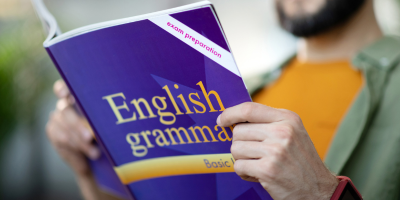
English grammar is full of rules that seem to contradict each other, exceptions that outnumber the rules, and special cases that confuse even native speakers. This guide breaks down 15+ of the most confusing grammar rules, providing clear explanations, practical examples, and memory tricks to help you master these tricky concepts once and for all.
Why English Grammar is Confusing:
English has borrowed from Latin, French, German, and dozens of other languages, creating a hybrid system with conflicting rules. Add in centuries of evolution and regional variations, and you have a recipe for confusion. The good news: most confusing rules follow patterns you can learn.
For years, teachers taught that ending sentences with prepositions was grammatically incorrect. This "rule" was based on Latin grammar, not English usage.
The Confusion:
Traditional rule: "Don't end sentences with prepositions."
Reality: This "rule" is outdated and often leads to awkward, unnatural sentences.
Examples:
"This is the situation about which I was thinking."
"This is the situation I was thinking about."
Modern Rule:
Ending sentences with prepositions is perfectly acceptable in modern English, especially in informal writing and speech. Avoid it only in very formal contexts.
A split infinitive occurs when an adverb is placed between "to" and the verb (e.g., "to boldly go").
The Confusion:
Traditional rule: "Never split infinitives."
Reality: Sometimes splitting infinitives creates clearer, more emphatic sentences.
Examples:
"She decided to forget quickly the incident."
"She decided to quickly forget the incident."
Memory Trick:
Remember Star Trek: "To boldly go where no one has gone before." If it's good enough for space exploration, it's good enough for your writing!
The "who vs. whom" distinction is disappearing from casual English but remains important in formal contexts.
The Confusion:
Rule: Use "who" for subjects, "whom" for objects.
Problem: Native speakers often use "who" for both in casual speech.
Technical Examples:
"Who called you?" (Who is the subject of called)
"Whom did you call?" (Whom is the object of call)
The "He/Him" Test:
If you can answer with "he," use "who." If you answer with "him," use "whom."
Confused by Grammar Rules?
Our Grammar Checker can instantly identify confusing grammar issues and explain the rules in simple terms. Get personalized suggestions for your specific writing.
Try Grammar Checker FreeThis distinction involves restrictive vs. non-restrictive clauses.
Meaning-Changing Examples:
"The books that are on the table need to be returned."
Meaning: Only the books on the table need returning.
"The books, which are on the table, need to be returned."
Meaning: All the books need returning, they happen to be on the table.
Simple Rule:
If the clause is essential to the meaning (restrictive), use "that" without commas. If it adds extra information (non-restrictive), use "which" with commas.
Use "fewer" for countable items, "less" for uncountable quantities, with interesting exceptions.
Standard Usage:
"Fewer people attended this year." (People are countable)
"We need less sugar in this recipe." (Sugar is uncountable)
Supermarket Trick:
Remember the supermarket signs: "10 items or fewer" (items are countable).
The Oxford comma is the comma placed before "and" or "or" in a list of three or more items.
Meaning-Changing Examples:
"I'd like to thank my parents, God and Ayn Rand."
"I'd like to thank my parents, God, and Ayn Rand."
Quick Reference:
Lay requires an object: "Lay the book down."
Lie doesn't: "I need to lie down."
Farther for physical distance, Further for metaphorical distance.
I.e. = "that is" (clarifies), E.g. = "for example" (gives examples).
Master Grammar Confusion:
1. Context matters: Formal vs. informal writing have different rules.
2. Clarity over rules: If a "rule" makes your writing unclear, break it.
3. Learn patterns: English has patterns even in its exceptions.
4. Read widely: Exposure to good writing builds intuition.
5. Use tools: Grammar checkers explain why something might be wrong.
Final Grammar Insight:
English grammar isn't about memorizing rigid rules, it's about understanding principles of clear communication. When you encounter conflicting advice, ask: "Which option makes my meaning clearest?" Often, the answer that serves communication best is the right one.